
Corporate Governance
Board of Directors
According to the company’s Articles of Association, the Board of Directors consists of 5–7 ordinary members. The Annual General Meeting elects the board members, and the term of office of the members of the board of directors shall end at the end of the Annual General Meeting following the election. The Shareholders’ Nomination Board prepares the proposal regarding the composition of the board for the decision of the Annual General Meeting.
The Board of Directors is responsible for the management of the company and the proper organization of its operations. The board also ensures the appropriate supervision of the company’s accounting and financial management. The board handles all matters within its area of responsibility as defined by Finnish law, the Articles of Association, the Corporate Governance Code, Nasdaq Helsinki regulations, and other rules and regulations applicable to Finnish listed companies. The board has general authority in all matters that are not assigned to another corporate body under law or the Articles of Association.
The board has adopted a written charter governing its operations, which defines the key duties and operating principles of the board and its chairperson. The board appoints and dismisses the President and CEO, supervises the President and CEO’s performance, and decides on the President and CEO’s remuneration and other terms of service. If necessary, the board may also appoint a deputy CEO. The board is responsible for significant decisions affecting the company and the group, such as the company’s strategy, major investments, mergers and acquisitions, governance structure, and profit distribution proposals.
The board must act diligently in promoting the interests of the company and all its shareholders. The board may not make decisions or take actions that would provide an unfair advantage to a shareholder or any other party at the expense of the company or another shareholder.
The Board of Directors assesses the independence of its members annually on the basis of the recommendations of the CG Code and other factors to be taken into account in the overall assessment. In order to make the assessment, each member of the Board provides the information necessary for the assessment of independence and presents their own assessment of their independence. The Board then assesses the independence of its members and states which of them are to be considered independent of the Company and and which of them are considered independent of significant shareholders.
Committees add
The Board of Directors may establish standing committees to assist the Board of Directors in preparing matters for which it is responsible. The Board of Directors decides on the size, composition and duties of the committees and approves the charters of the standing committees. The Board of Directors appoints the members and the chair of the committee from among its members.
The Board of Directors’ committees do not have independent decision-making power in matters within the Board of Directors’ competence, but they assist the Board of Directors in the preparation of such matters, and the Board of Directors makes its decisions collectively
Audit Committee
The Board of Directors has established an Audit Committee for the company. The Board of Directors has approved a written charter for the Audit Committee, defining its purpose, composition, operations, duties, and qualification requirements for its members.
According to its charter, the Audit Committee assists the Board of Directors in fulfilling its oversight responsibilities regarding the company’s financial and sustainability reporting processes, statutory auditing, and sustainability assurance. It also supports the Board of Directors in monitoring financial statements, sustainability audit, internal control, internal audit, risk management systems, and related-party transactions, making recommendations to the Board of Directors on these matters.
Additionally, the Audit Committee is responsible for preparing the selection of the Auditor and the Sustainability Auditor, assessing their independence, particularly regarding non-audit services, and performing other tasks assigned by the Board of Directors. The Audit Committee also monitors and evaluates the effectiveness of the internal control and risk management systems and assesses the performance of the Auditor and the Sustainability Auditor.
Personnel and Remuneration Committee
The Board of Directors has established a Personnel and Remuneration Committee for the company. The Board of Directors has approved a written charter for the committee, defining its purpose, composition, operations, duties, and the qualification requirements for its members.
According to its charter, the committee assists the Board of Directors in handling matters related to the appointment and remuneration of the CEO and other senior management, management succession planning, the preparation of employee remuneration and incentive systems, and the assessment of the implementation of the company’s HR policy. Additionally, the committee is responsible for preparing the company’s remuneration policy and remuneration report, presenting them at the General Meeting, and addressing related questions.
Tender and Project Committee
The Board of Directors has established a Tender and Project Committee for the company. The Board of Directors has approved a written charter for the committee, defining its purpose, composition, operations, duties, and the qualification requirements for its members.
According to its charter, the committee’s purpose is to review and prepare significant contract tenders for the Board of Directors’ decision and to monitor the progress of such projects. Additionally, the committee supports management in assessing project risks and opportunities, defining appropriate risk management measures, and ensuring the successful negotiation and implementation of projects.
Diversity of the Board of Directors add
GRK aims to ensure that the composition of its board of directors reflects diversity. A broad range of skills, experience, and perspectives among board members enables comprehensive discussions to support decision-making and provides both support and challenge to the company’s executive management. Men and women shall be equally represented on the board of directors.
To achieve its diversity objectives, GRK has established written board diversity principles, which the Shareholders’ Nomination Board considers when preparing proposals for the composition and members of the board.
The company reports on the implementation of diversity in its annual corporate governance statement.

Kari Kauniskangas, b. 1974
Chair of the Board of Directors
Member of the Board since 2022–
Member of the Audit Committee 2022–
Member of the Tender and Project Committee 2025–
Main occupation: CEO at A-Insinöörit Oy
Education: M.Sc., B.Sc.
Gender: Male
Independent of the company and significant shareholders.
Background add
Career history:
- A-Insinöörit Oy, CEO 2023–
- YIT Corporation, Group director and CEO 2013–2020
- YIT Corporation, Executive Vice President, Deputy CEO, Business Director of International Constructions Services 2008–2013
- YIT Construction Ltd, CEO, 2009–2020
- YIT Construction Ltd, Business Group Director, 2005–2007
- YIT Construction Ltd, Business Unit Director, Oulu, 2001–2005
Key positions of trust:
- SKOL ry, Member of the Board 2023–
- Habeo Group HoldCo Oy ja Habeo Group Oy, Chairman of the Board of Directors 2022–
- Kojamo Oyj, Member of the Board 2022–

Keijo Haavikko, b. 1963
Vice Chair of the Board of Directors
Member of the Board of Directors since 2014–
Member of the Tender and Project Committee 2025–
Member of the Personnel and Remuneration Committee 2025–
Main occupation: Infrastructure industry professional
Education: M.Sc.
Gender: Male
Not independent of the company, significant shareholders.
Background add
Career history:
- GRK Infra Plc, Deputy CEO 2021–2023, CEO 2011–2014 and 2020–2021 and full-time Chairman of the Board 2014–2020
- GRK Infra AB, temporary CEO, 2014
- Graniittirakennus Kallio Oy, CEO, 2011–2014
- Niska & Nyyssönen Oy, CEO 2000–2010
- Viatek Oy, various manager roles 1995–2000
- Maansiirtokarit Oy, Site Manager 1992–1994
- YIT, Project Manager 1990–1992
Key positions of trust:
–

Antonia Eneh, b. 1999
Member of the Board of Directors since 2025–
Member of the Personnel and Remuneration Committee 2025–
Main occupation: CEO, Wave Ventures Oy
Education: B.Sc.
Gender: Female
Independent of the company and significant shareholders.
Background add
Career History:
- Wave Ventures, CEO, 2024–
- Slush Oy, CFO, 2022–2023
Key positions of trust:
- Member of the Board of Directors, Wave III GP Oy 2024–

Minna Heinonen, b. 1967
Member of the Board of Directors 2025–
Member of the Tender and Project Committee 2025–
Main occupation: CEO, Rapp Valvontakonsultit Oy
Education: Bachelor of Laws
Gender: Female
Independent of the company and significant shareholders.
Background add
Career history:
- Rapp Valvontakonsultit Oy, CEO 2021–
- Destia, various positions as head of units 2009–2019
Key positions of trust:
–

Jukka Nikkanen, b. 1968
Member of the Board of Directors 2017–
Chairman of the Audit Committee 2022–
Main occupation: Professional board member, Entrepreneur
Education: M.Sc. (Econ.)
Gender: Male
Independent of the company and significant shareholders.
Background add
Career history:
- FlowArc Oy, 2015–
- Lähi-Rahoitus Oy (current Noja-Rahoitus Oy), member of the Board of Directors or Chairman of the Board of Directors, part-owner 2016–2021
- Salmela-Yhtiöt, various positions at management, as CEO and in the Board of Directors at companies in te Group, 2004–2015
- Jokinen-Yhtiöt, numerous senior executive, CEO, and board positions in the group 1994–2003
Key positions of trust:
- Ardor Oy, Chairman of the Board of Directors 2021–

Tarja Pääkkönen, b. 1962
Member of the Board of Directors since 2018–
Chairman of the Personnel and Remuneration Committee 2025–
Main occupation: Partner and shareholder, Boardman Oy, professional board member
Education: M.Sc. (Eng), licentiate degree (technology) and Ph.D
Gender: Female
Independent of the company and significant shareholders.
Background add
Career history:
- Boardman Oy, Partner 2010–
- Itella Oyj, Senior Vice President 2004–2010
- Nokia Oyj, Senior Vice President 1995–2004.
Key positions of trust:
- United Bankers Plc, member of the Board of Directors and Remuneration Committee 2018–
- Panostaja Oyj, member of the Board of Directors 2016–
- SATO Corporation, member of the Board of Directors and Remuneration Committee 2013–
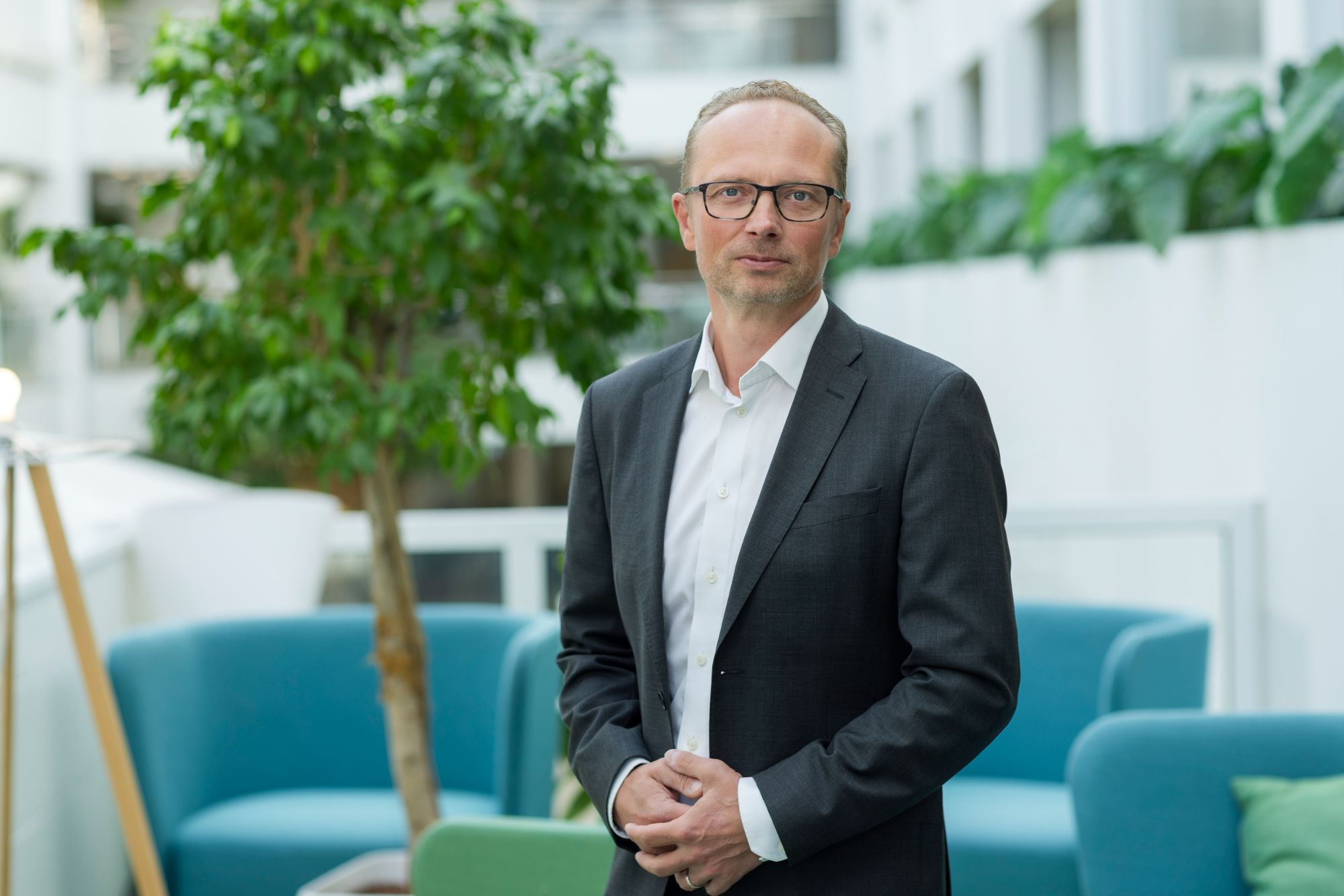
Kai Laitinen, b. 1970
Member of the Board of Directors since 2026–
Member of the Audit Committee 2026–
Main occupation: Professional board member
Education: M.Sc. (Econ.), CEFA
Gender: Male
Independent of the company and significant shareholders.
Background add
Career history:
- CFO & Member of the Management Team: Gasum Oy 2019–2025, Interim CEO 8/2021–2/2022
- CFO & Member of the Management Team: Stockmann Oyj 2017–2019
- CFO & Member of the Management Team: Finavia Oyj 2014–2017
- Various leadership roles in finance, treasury and risk management: Outokumpu Oyj 1994–2001, 2003–2014
- Global Risk Management Solutions, Manager: PricewaterhouseCoopers Helsinki 2001–2003
Key positions of trust:
- Member of the Board: Euroclear Finland oy (2020–), Chair of the Board Risk Committee (2020–2023), Chair of the Audit Committee (2023-), Member of Remuneration, Nominations and Governance Committee

-optimized.jpg)